
Pastor Sandra Miller





Shekinah Family Worship Center
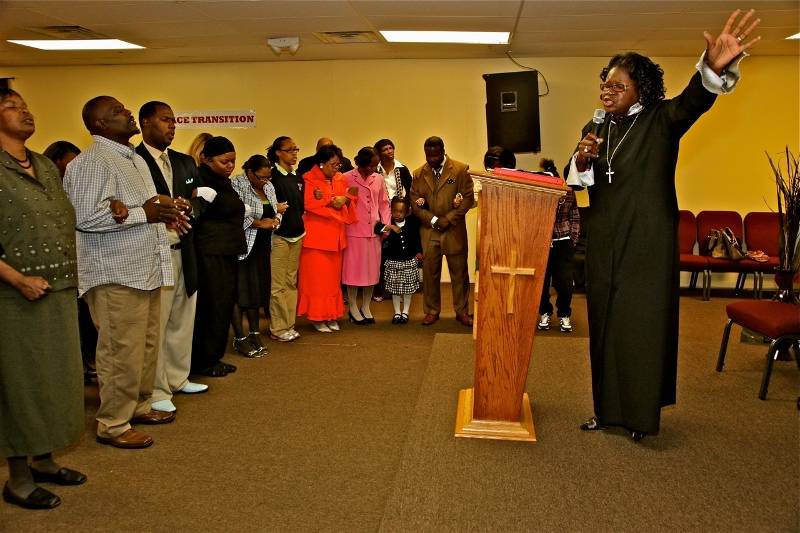
The Sunday worship service at Shekinah Family Worship Center begins promptly at four o' clock in the evening. Punctuality is important. The service begins with the call to worship where congregants hear several short passages recited from Psalms: "This is the day that the Lord has made, Let us rejoice and be glad in it." Then, "I was glad when they said unto me; Let us go into the house of the Lord." The purpose of the call to worship is twofold. First, it announces the official gathering of the people. Secondly, it is designed to welcome the presence (or spirit) of God in the assembly.
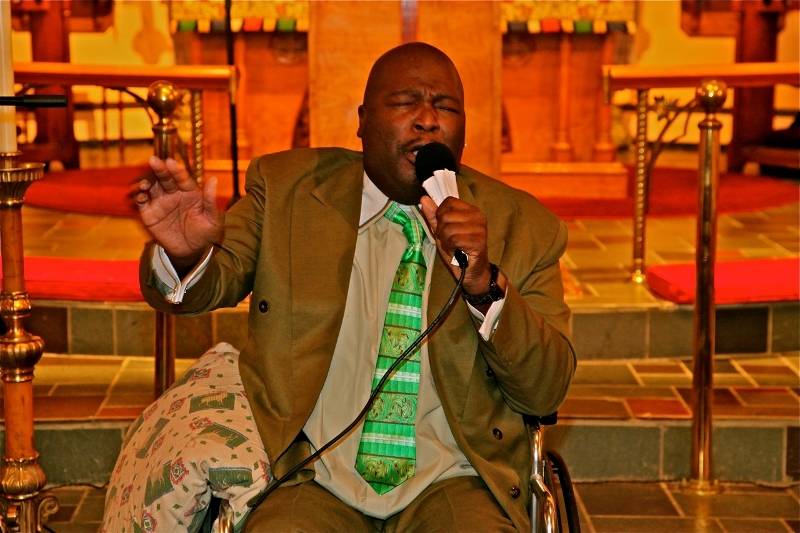
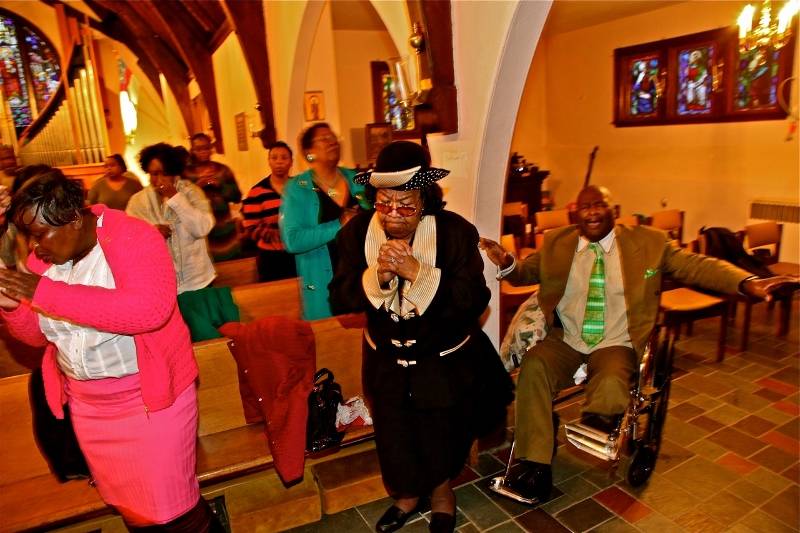
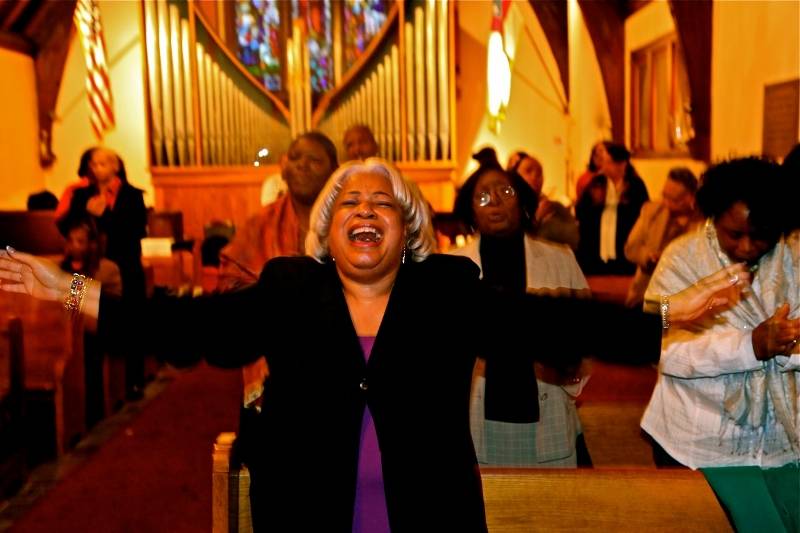
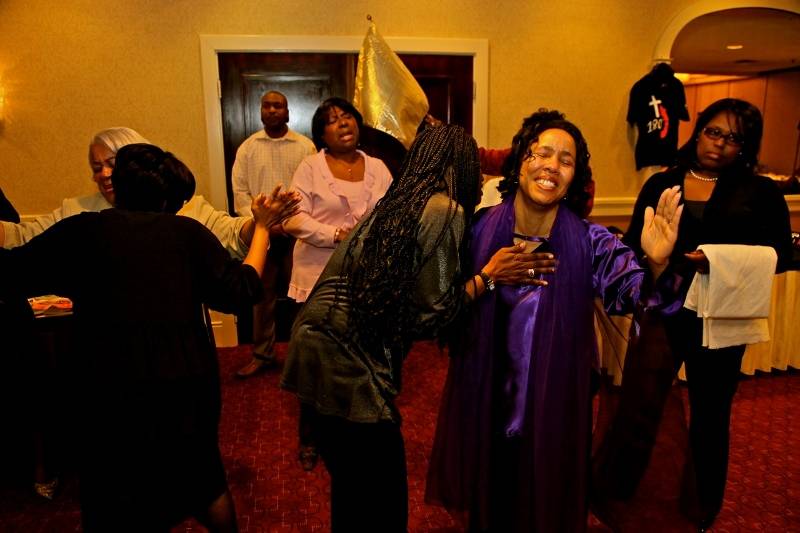
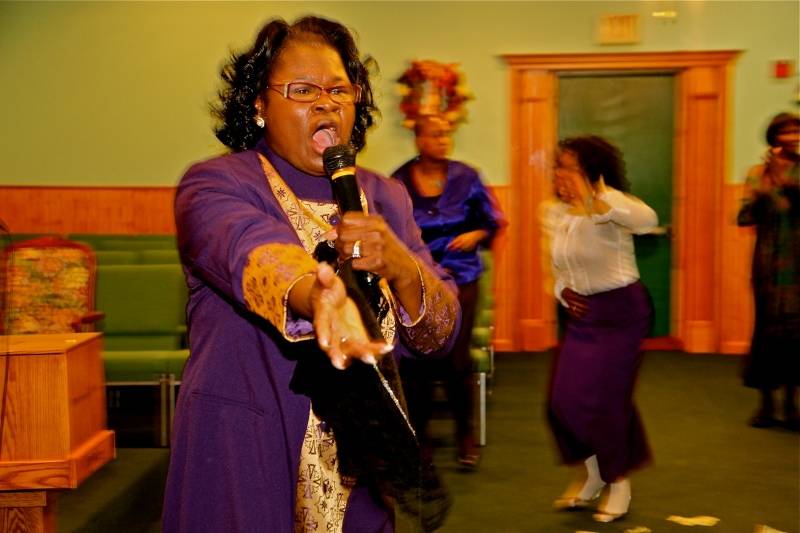
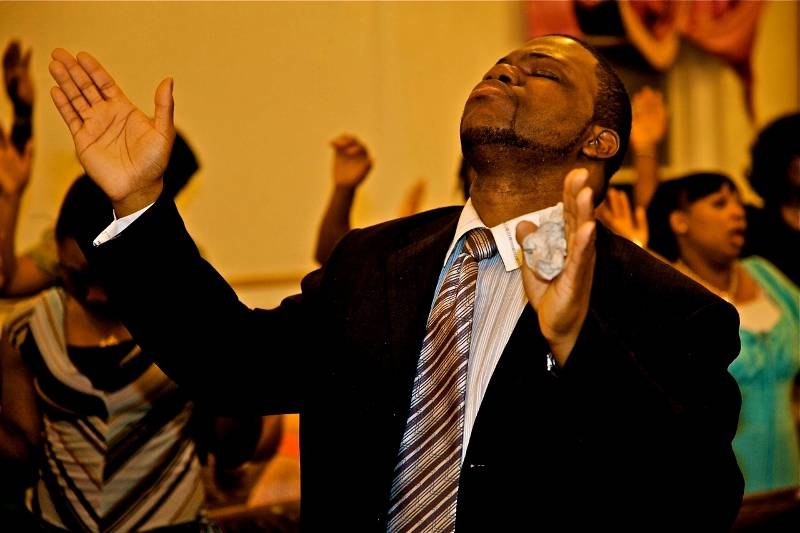
After the call to worship, one of the assistant ministers reads a select passage from scripture and delivers a prayer. The worship leader, Ruffus Jackson, leads the congregation in worship through song. A gifted soloist, Jackson effortlessly navigates both traditional and contemporary gospel songs. He gracefully moves from Israel Houghton's "Again I Say Rejoice" to an "old-school" favorite, "Jesus, I Will Never Forget." Regardless of age, all congregants passionately participate in the worship service through song and dance, and thus invite the spirit of God to dwell in the sanctuary.
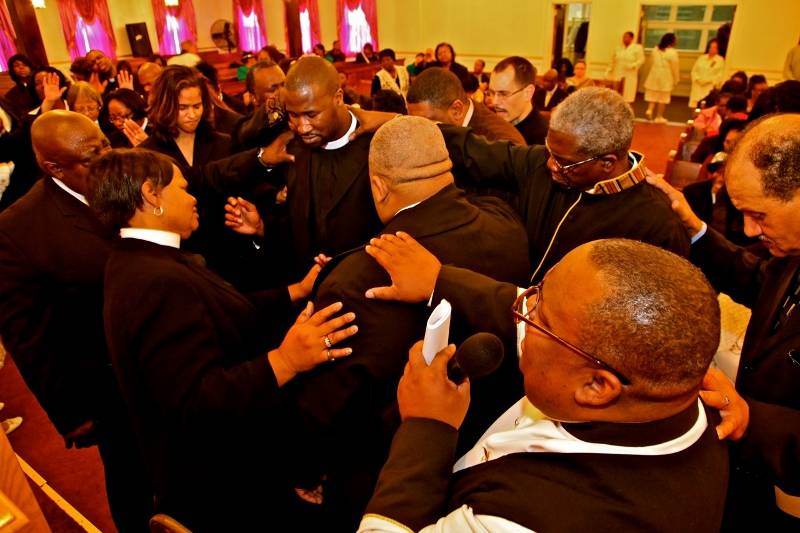
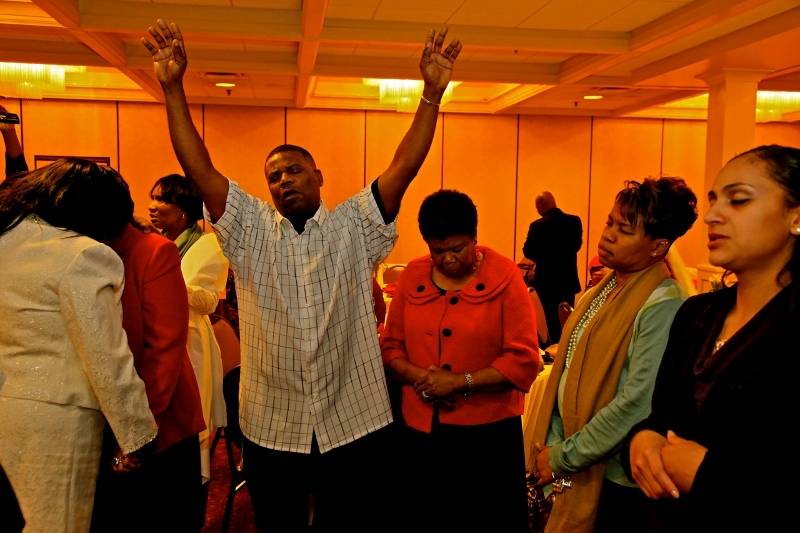
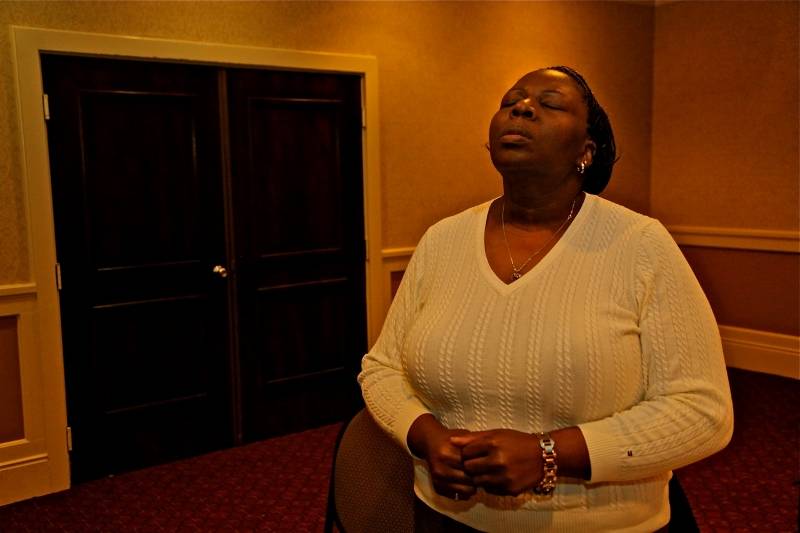
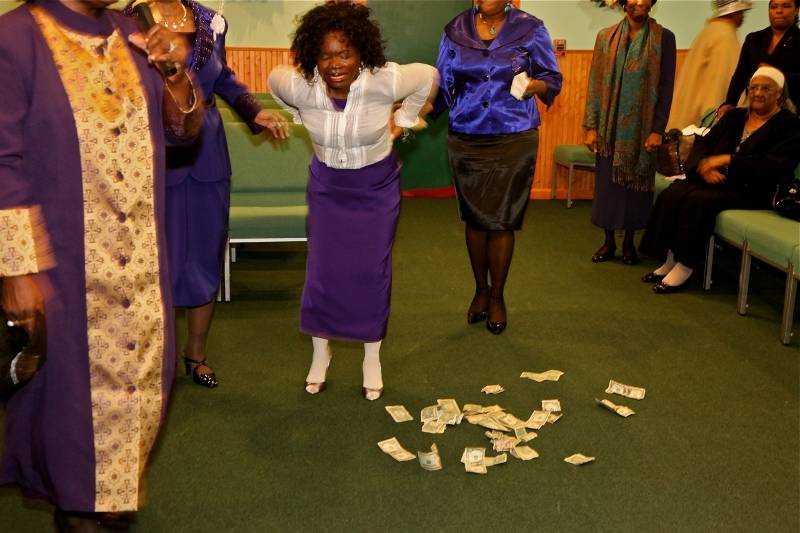
Congregants next volunteer to verbalize their prayer requests, expressing whatever ailment or situation plagues their hearts and minds. Others decide to reflect on their situation in preparation to cast their "cares and worries on Jesus who cares for them." An assigned chaplain delivers a heartfelt and earnest prayer, petitioning God to address both spoken and unspoken requests. After the congregational prayer, the tithes and offerings are collected. Church leaders (or, preferably "kingdom servants") and congregants give their tithes and offerings while they sang contemporary gospel artist, Fred Hammond' s "We're Blessed." The tithes and offerings are followed by the church announcements, where an individual keeps the congregants abreast of the "life and happenings" at the Shekinah Family Worship Center. In order to clear all hearts and minds to receive the sermon or the "What thus saith the Lord," the worship leader and choir sing an appropriate selection.
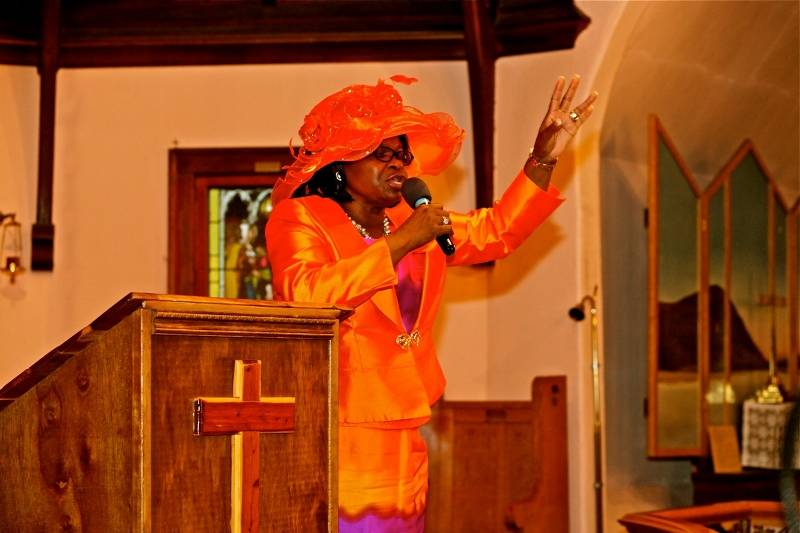
Shekinah's pastors are deliberate in placing the sermon last on the service's agenda. According to Pastor Sandra Miller (or Pastor "M"), the "Word of God" is final and definitive, and nothing is worthy to follow it. It is clear that order is an important aspect in the afternoon worship service at Shekinah Family Worship Center. Yet, order does not override the freedom that individuals so apparently feel and express when they encounter the divine spirit or presence of God.
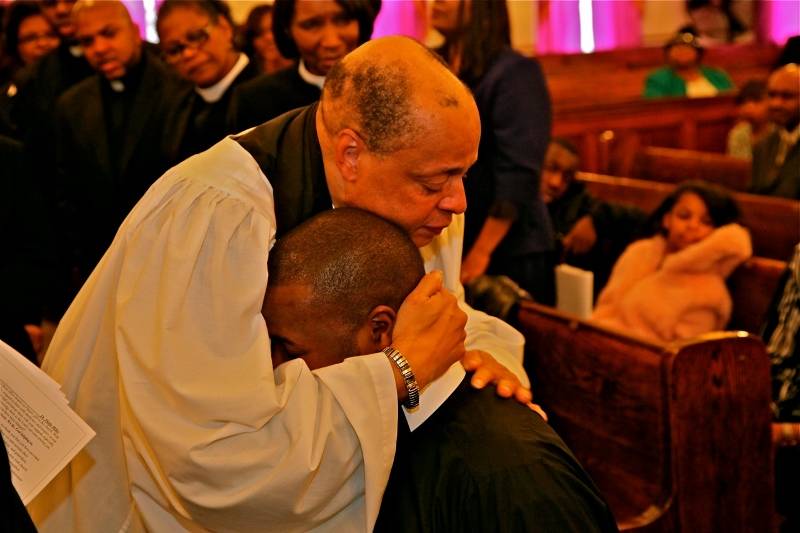
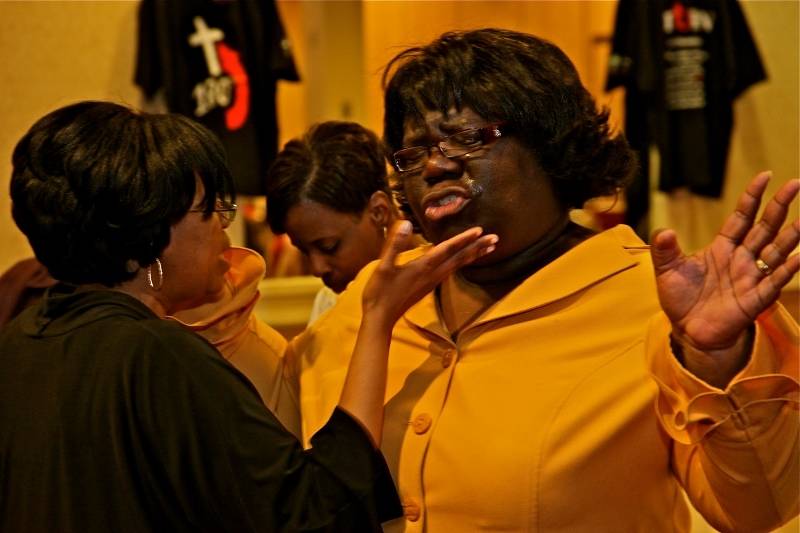
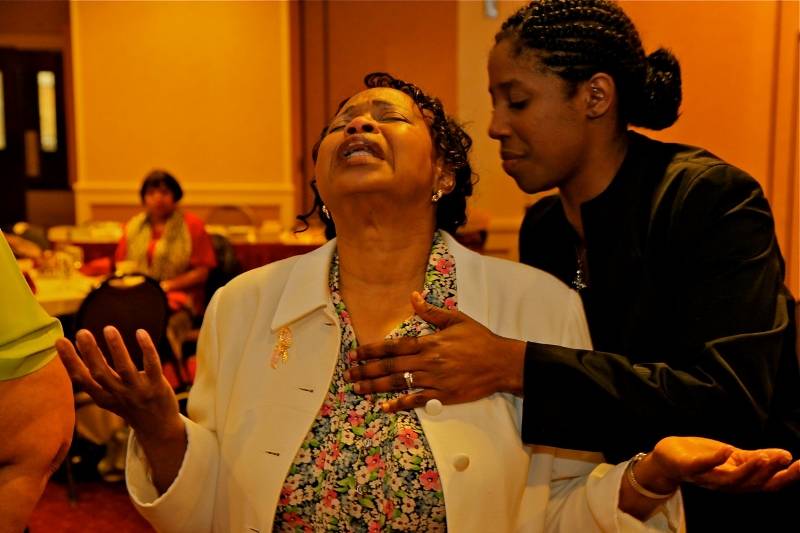
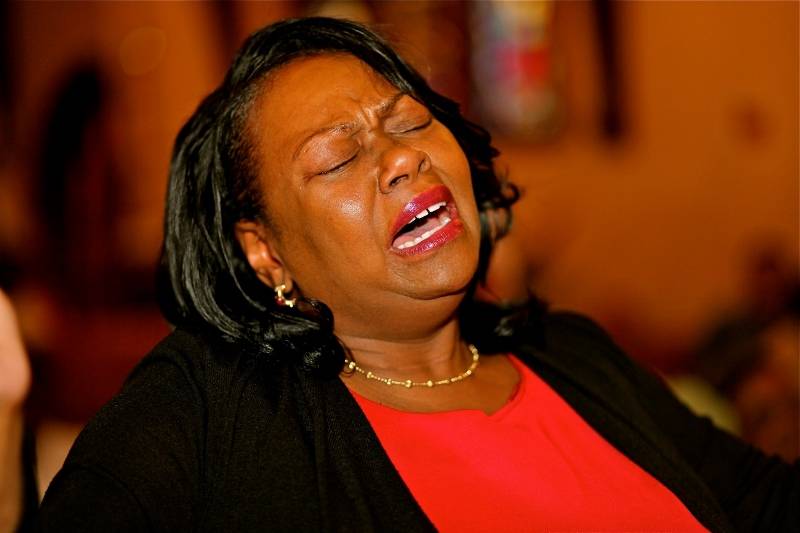
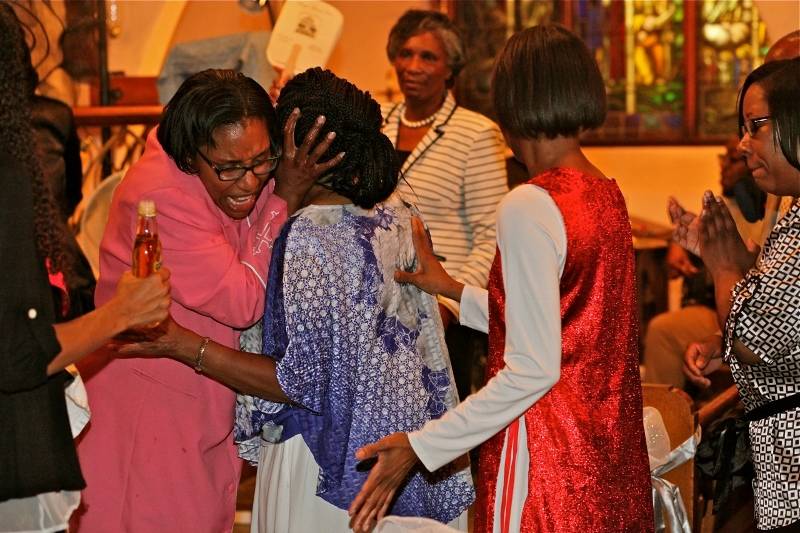
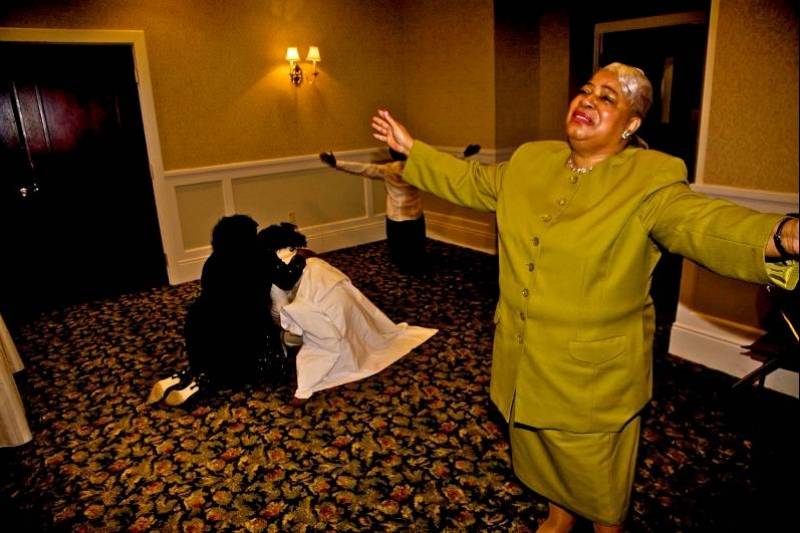
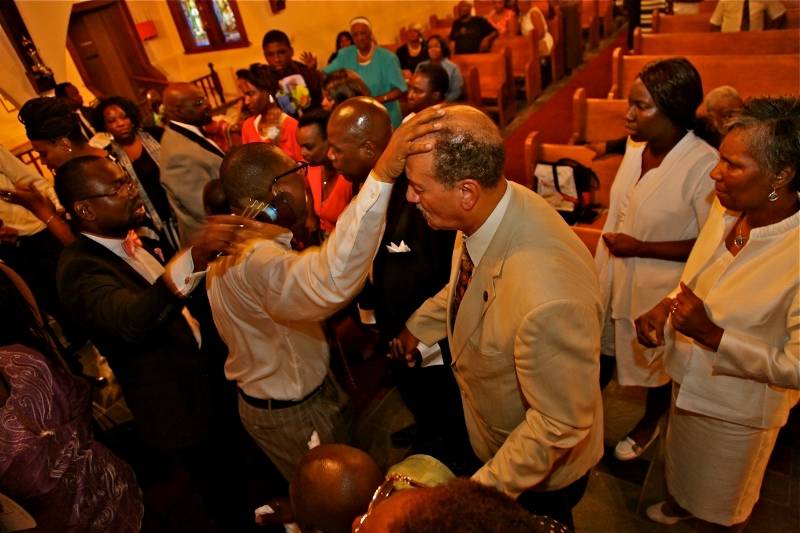
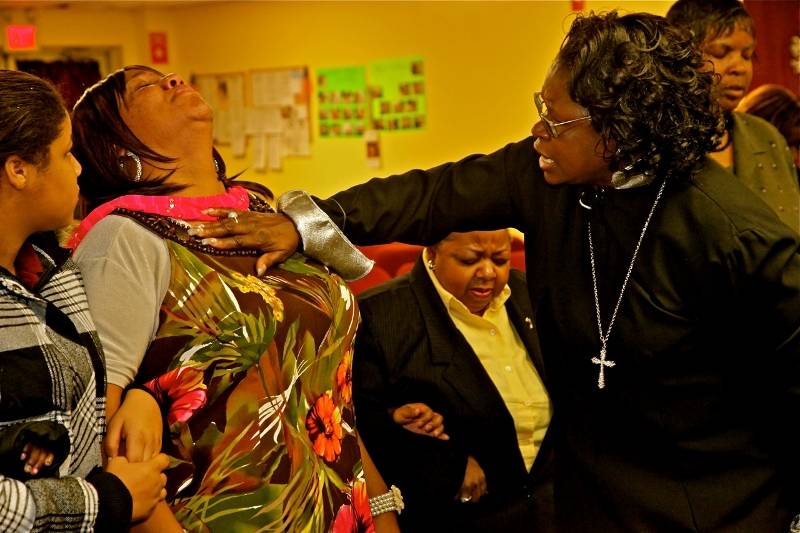
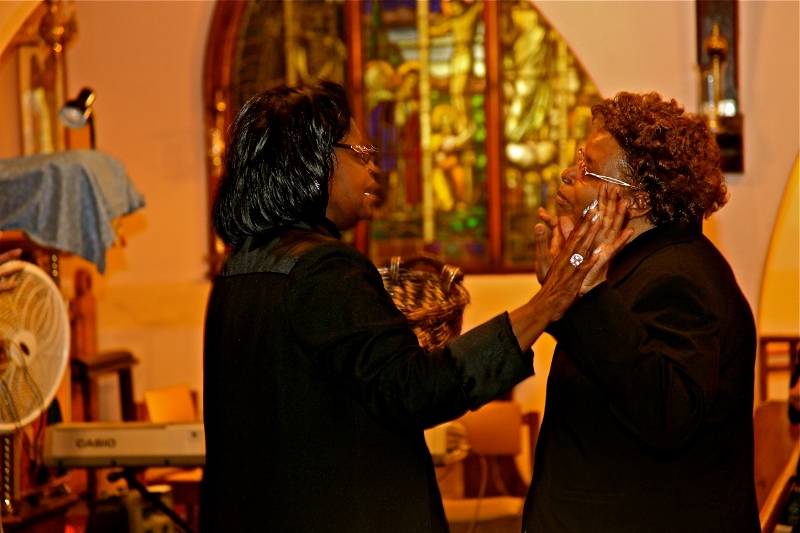
On some occasions, the standard protocol in the afternoon worship service is interrupted by what Pastor M calls the 'behind the veil worship'. The behind the veil worship is when the congregants are overcome with the divine spirit for over an hour. Usually this experience is accompanied by various verbal and bodily ecstatic expressions and exhortations such as speaking in tongues, shouting, dancing, fainting, "being slain in the spirit", and tears. The up-tempo tunes engineered by the bass, keyboard, and drums form the aural background for the expressions and exhortations.
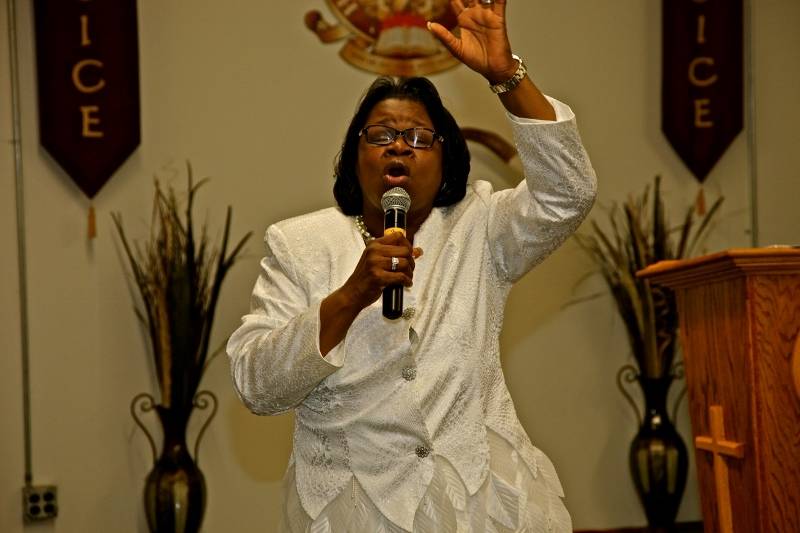
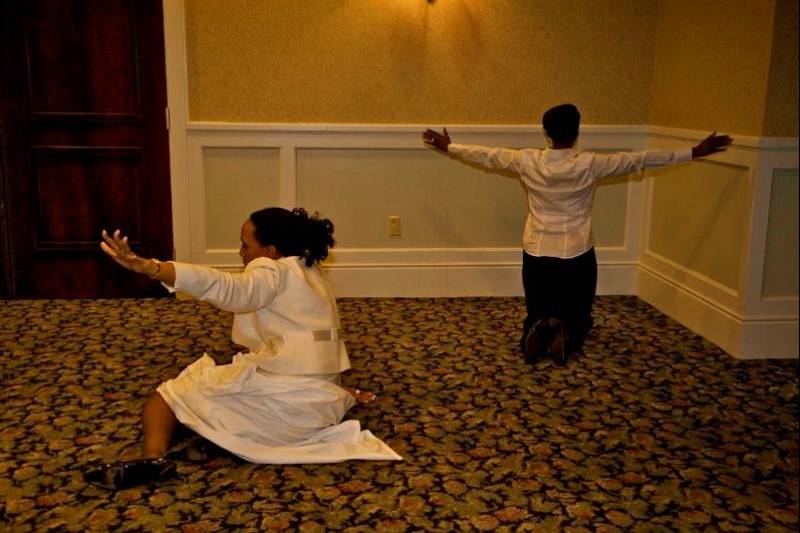
As Iain MacRoberts states, "the music and rhythm [are] vehicles that connect individuals and communities to the spirit." Such verbal and bodily expressions are the evidence of "spiritual possession and spiritual power." To be sure, the "behind the veil" worship experience actually encapsulates the church's name, Shekinah. Borrowing from the Hebrew lexicon, Shekinah is often translated as "dwelling in the divine Presence of God." In this sense, the Shekinah Family Worship Center creates a sacred space where individuals can directly encounter the "not-too-distant" spirit or presence of God in order to achieve their highest selves. The belief that everyday and ordinary human beings have the capacity to dwell in the immanent presence or spirit of God illustrates the perfectionist strain that distinguished both Holiness and subsequent Pentecostal faiths in 19th and 20th century America.
The faith that humans can obtain the power of God represents a perfectionist sentiment that counters the religious preoccupation with human depravity and sin. Shekinah glory or the human capacity to dwelling in the spirit or presence of God contributes to the overall belief in sanctification. Pastor Miller rightly points out that sanctification is the cornerstone not only in Shekinah Family Worship Center but also in Pentecostalism generally. Sanctification literally means a life that is set apart. The theological concept of sanctification is usually attributed to eighteenth century Anglican John Wesley, yet it really gained popular appeal in American religious history when individuals, such as William Seymour, articulated the post-conversion belief of the "second work of grace" or the "baptism of the Holy Spirit."1
The belief of the "second work of grace" highlights the gifts of the spirits that are demonstrated especially in the practices of speaking in tongues, but also in healing and prophecy. More specifically to African American religious experience, the significance of sanctification "affirmed black dignity and lifted the believer out of the mundane [world of white supremacy] into ecstatic consciousness of God's presence, power and love."2
Pastor Miller understands the historical significance of sanctification and spirit power among African Americans, particularly the "poor, dispossessed, disenfranchised, ill-educated..."3
For Pastor Miller, the sanctified roots of Pentecostalism are often ignored by the new generation of neo-Pentecostals due to their social and economic status in mainstream society. While she is particularly open to new forms of religious expressions and mediums such as Christian hip-hop or Facebook, she nevertheless values the traditional emphasis on sanctification that captures the fire and power of the spirit in human beings. Shekinah Family Worship Center seeks to restore the sanctified roots established at Pentecost but extended by blacks in North America. It is also important to remember that sanctification to the Shekinah Family Worship Center extends to its many outreach programs: Men's and Women's mentoring programs, the Backpack School project, the Thanksgiving project and the Food and Household Pantry to name a few.
For Pastor Miller, the most important work of the church takes place outside its walls. It is not a surprise that Miller desires to revive what Zora Neale Hurston called the "Sanctified Church." Pastor Miller's emphasis on sanctification is directly intertwined with her own religious experience, particularly in Providence, Rhode Island. Raised in a Methodist Episcopal congregation in Charleston, S.C., Pastor Miller converted to Pentecostalism while visiting Mount Calvary of Deliverance (or "The Mount") under Pastor Goldie Ricketts. Miller was immediately drawn to the freedom that the church afforded individuals to express their inner feelings of the spirit through song, dance, prayer, testimony, and preaching. In a nutshell, Pastor M noted that the people were on "fire!" On one occasion at the Church of Deliverance in the mid or late '70s, Pastor M participated in worship service where the presence of God entered the sanctuary and caused individuals to be slain in the spirit. The next day, Ricketts explained to Miller that the worship service represented the Shekinah Glory - meaning the full presence of God. Admiring the word and, most importantly, the experience, Pastor M jokingly stated that she would name her ministry Shekinah. Miller and her husband, Dr. Philip Miller, founded the Shekinah Family Worship Center in 2003.
Yet Miller did not totally severe from her Methodist background. It was her Methodist congregation, Mount Hermon, that taught her the "foundations of Christian living" as well as knowledge of the scriptures. At Mount Hermon, she first witnessed how individuals applied the scriptures to their daily living. In fact, the emphasis on order in the worship service, such as in the "call to worship," is accredited to her Methodist upbringing. In this sense, Miller's spiritual development must also be attributed to the matriarchs, her great- great grandmother, grandmother, mother and aunt. Yet her experience with Pastor Ricketts proved transformative. Serving on the Pulpit Aid Ministry, like her mother at Mt. Hermon, Pastor M imbibed what she described as the anointing of Pastor Ricketts in her charismatic preaching, spiritual gift of prophecy, gift of healing, and business savvy. Miller attributes her ministry to her experiences with Ricketts.
The Shekinah Family Worship Center is a beacon of hope for the people of Providence. It is ushering in the "Kingdom of God" by mirroring individuals' spiritual substance and power. By experiencing Shekinah, the individual will realize that God is not too far from the everyday world they inhabit. In this sense, Pastor Miller is filling her mentor, Pastor Ricketts', "blue shoes" by defying the expectations largely assigned to black women clergy and female clergy generally in North America.
1 For more information on "Wesleyan-Holiness, especially in the Northern states," see: Randall J. Stephens, The Fire Spreads: Holiness and Pentecostalism in the American South (Cambridge: Harvard University Press, 2008). For more information on William J. Seymour and the Azusa Mission, see: Iain MacRoberts "The Birth of a Movement: William J. Seymour and the Azusa Mission" and "The Black Roots of Pentecostalism" in African American Religious Thought: An Anthology, eds. Cornel West and Eddie Glaude (Louisville: Westminster John Knox Press, 2003), 616-628.
2 See: Iain MacRoberts, "The Spirit and the Wall" in African American Religious Thought: An Anthology, 90-91.
3 Ibid.