
Apostle Robert Robinson
The House of Manna
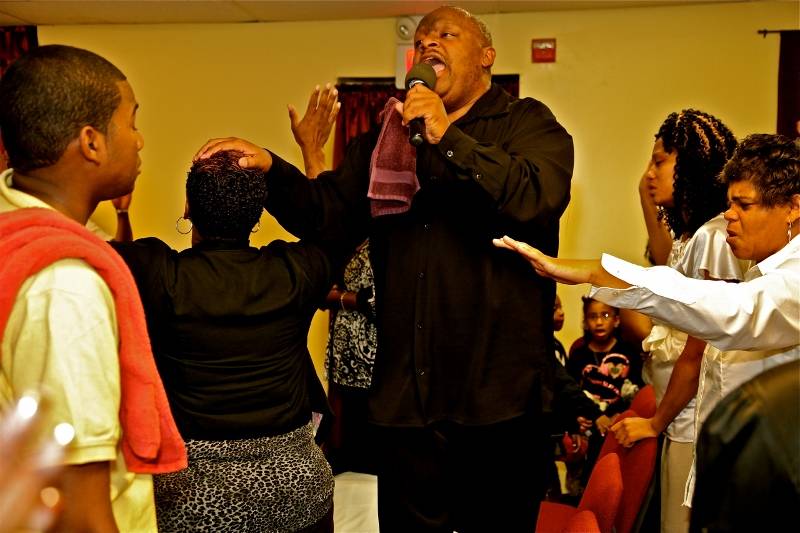
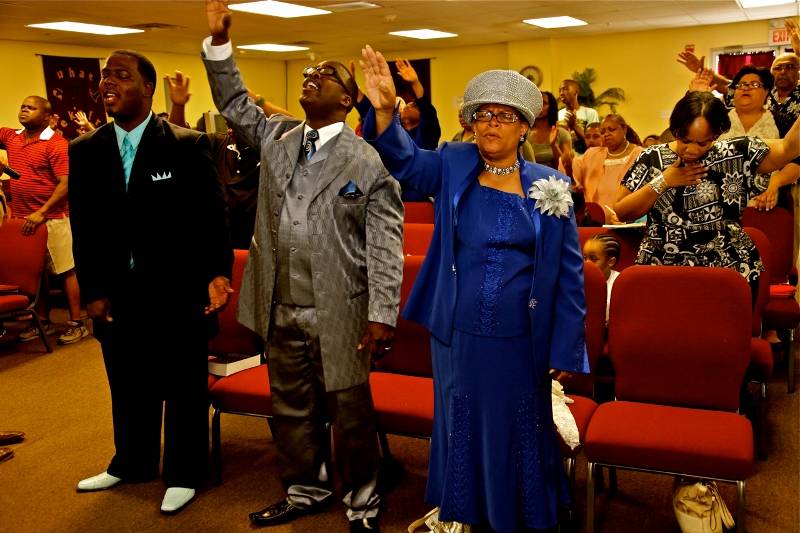
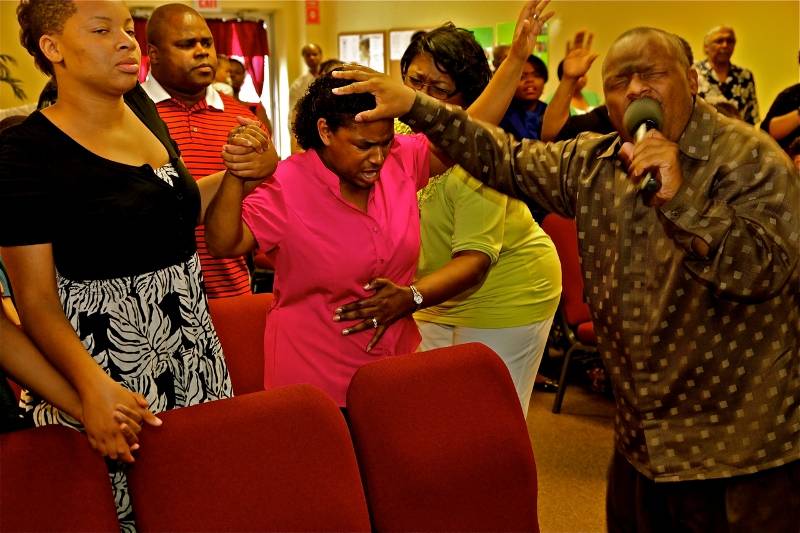
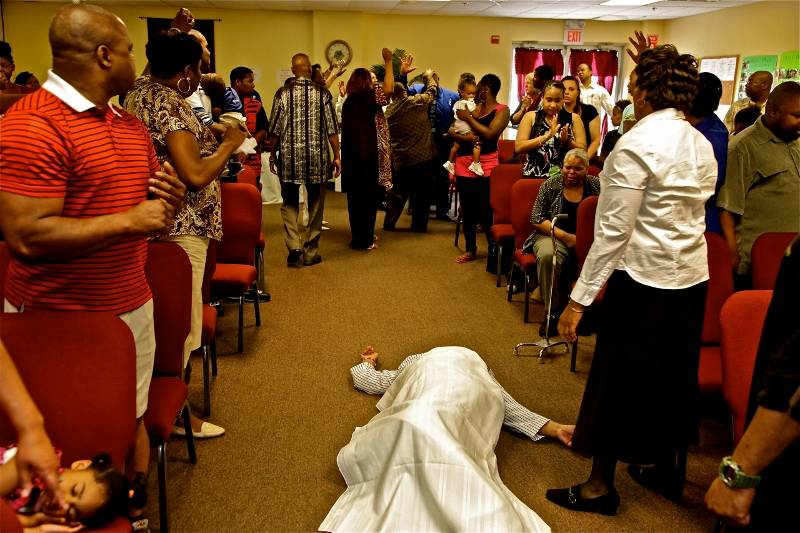
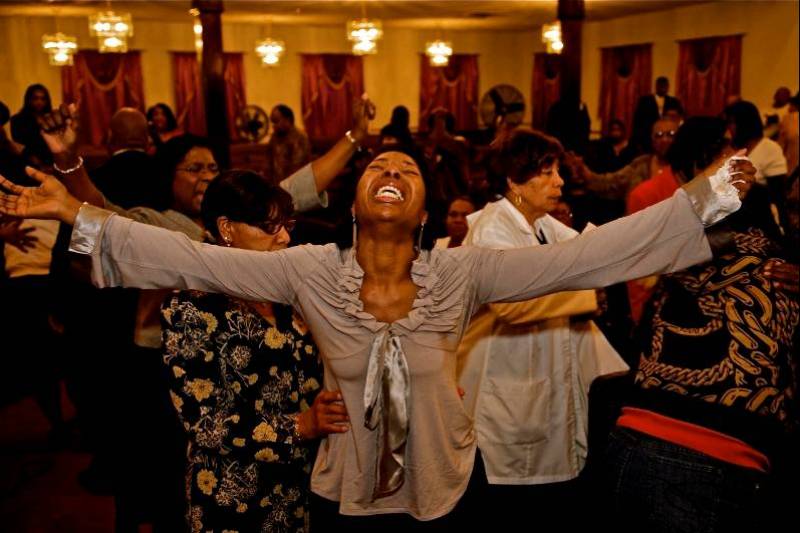
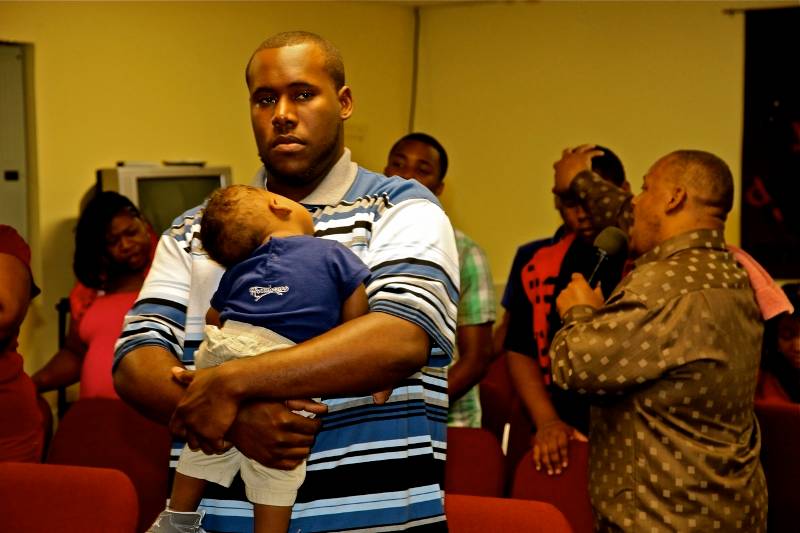
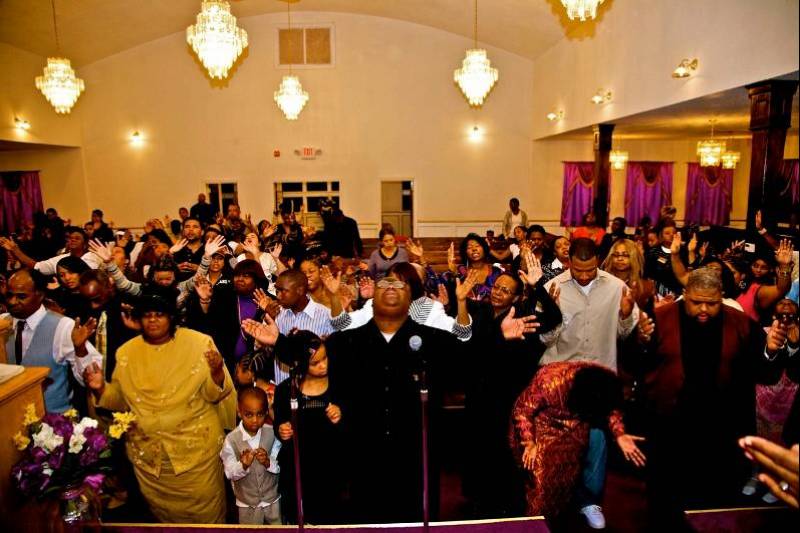
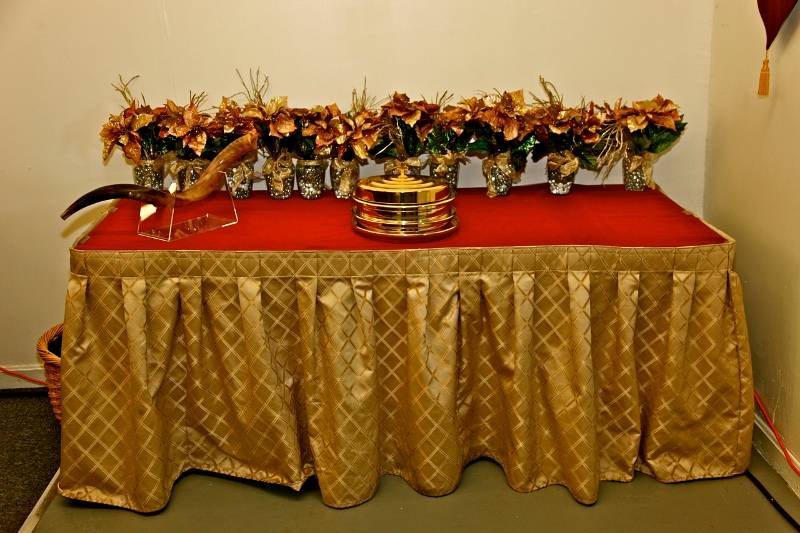
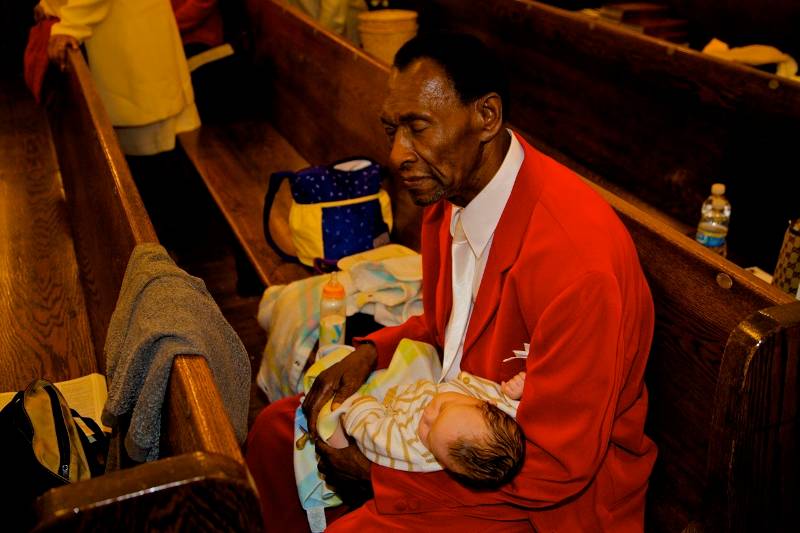
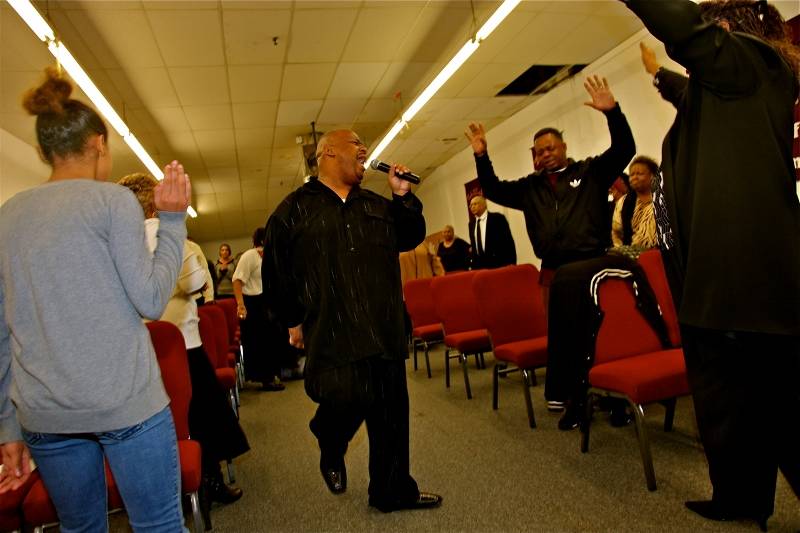
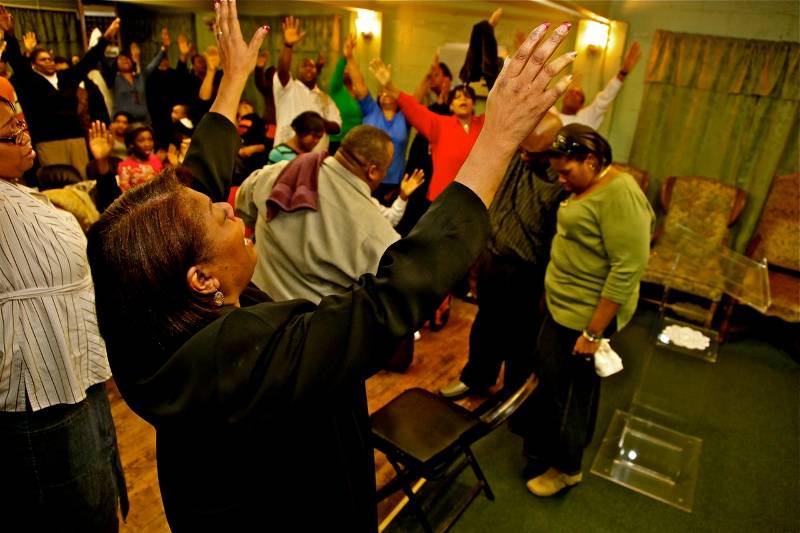
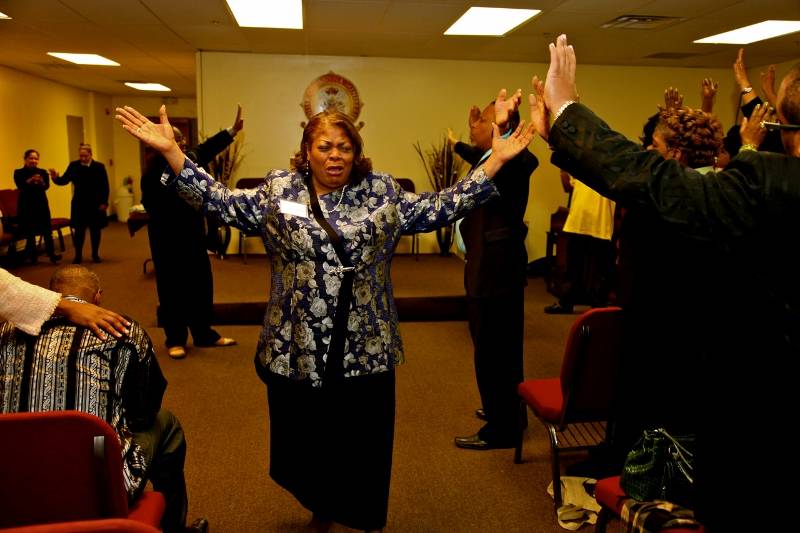
One of Providence's vibrant religious communities is the House of Manna on Academy Avenue. Located in a grey brick storefront next to an All-State Insurance office and across the street from a Walgreens, the House of Manna has been a beacon of hope for the Providence community well over a decade. Its storefront structure is reminiscent of a historical period when blacks migrated from rural to urban environments, and transformed commercial stores into sacred places of worship in the first half of the twentieth century. The cream-color walls, olive green carpets, and crimson cushioned chairs that make up the three thousand square foot storefront's interior forms the backdrop where congregants from all walks of life seek a direct encounter with the Spirit of God. Similar to the Protestant Restoration movements of nineteenth-century America, the House of Manna seeks to embody the one true church first exhibited when the Spirit of God fell on the disciples and followers on the day of Pentecost (Acts 2). According to the House of Manna's leader, Apostle Robert Robinson, Pentecostalism is not a denomination, but a movement that seeks to usher in the "Kingdom of God."
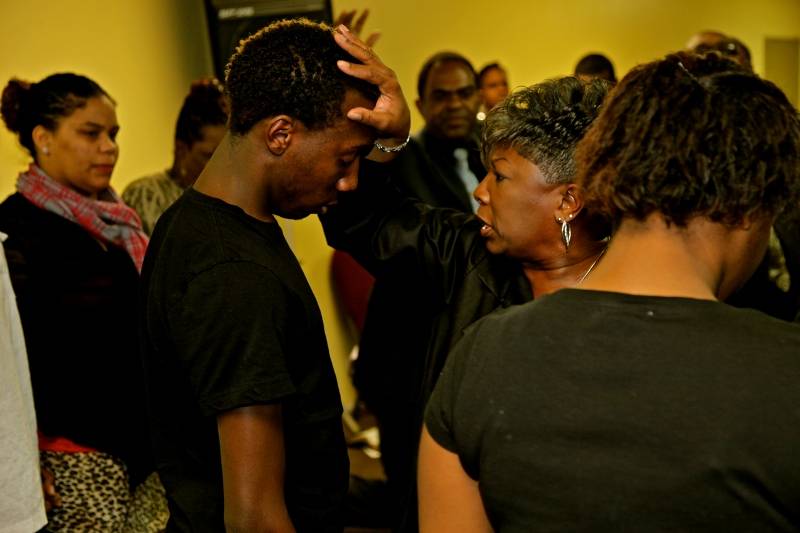
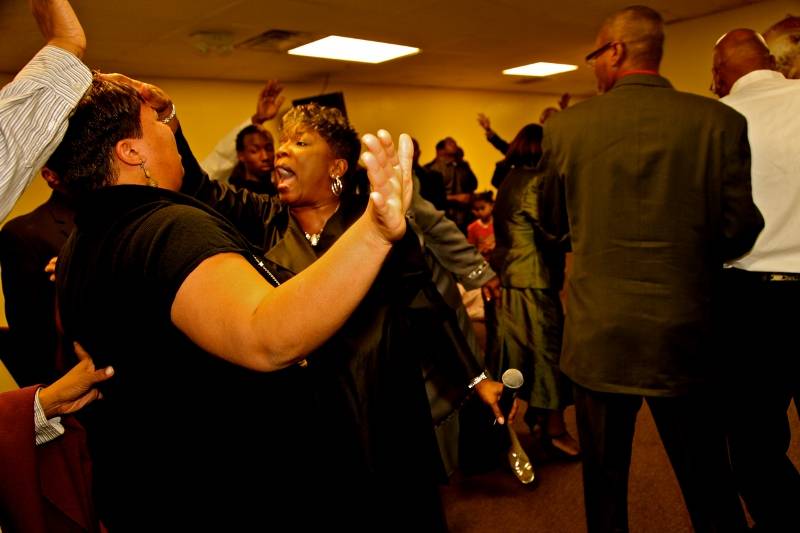
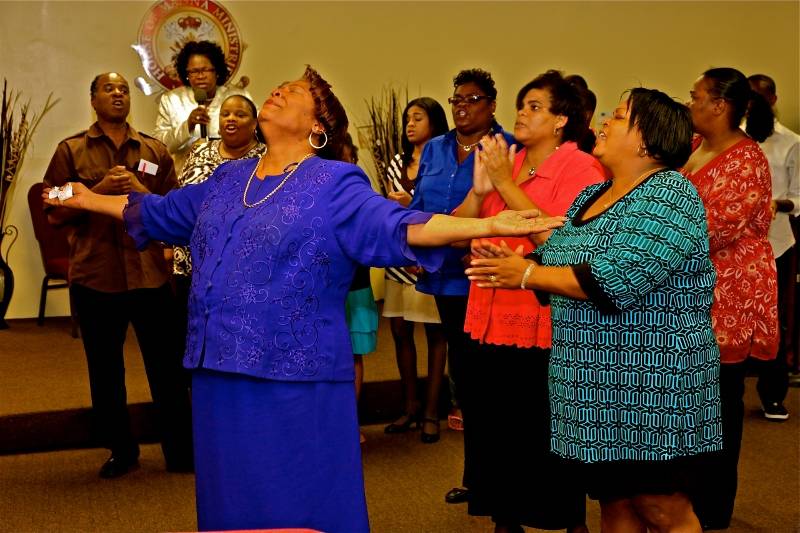
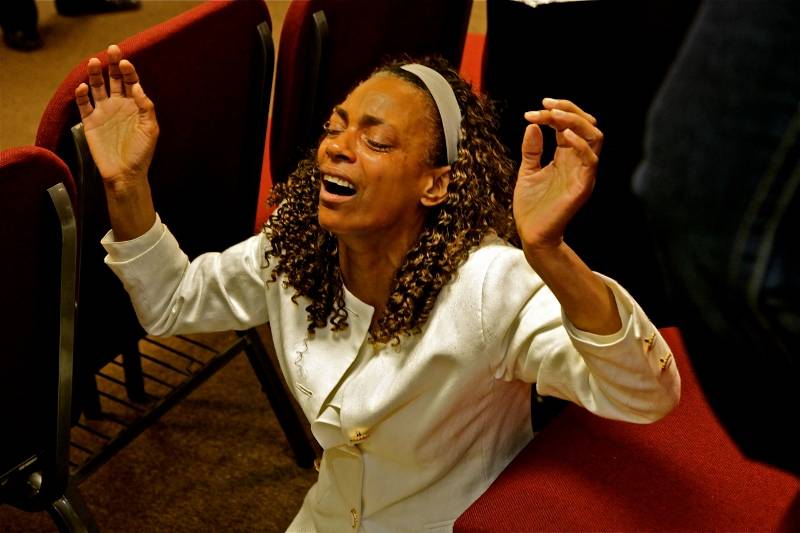
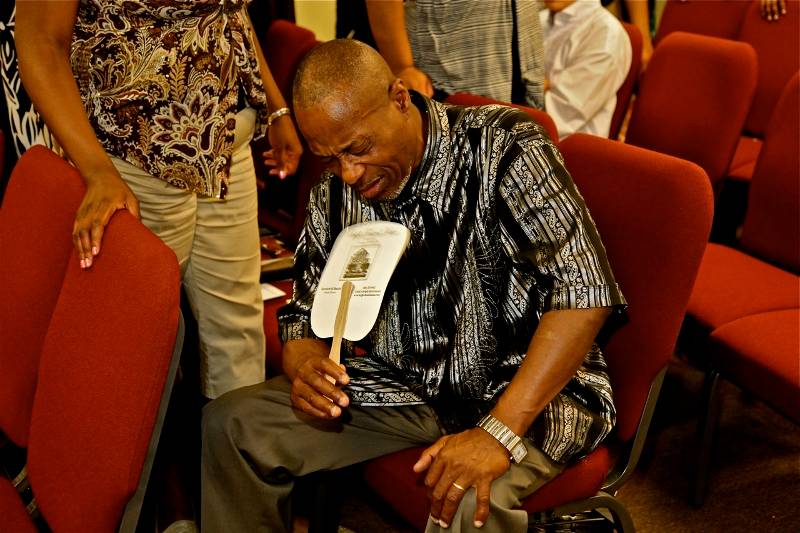
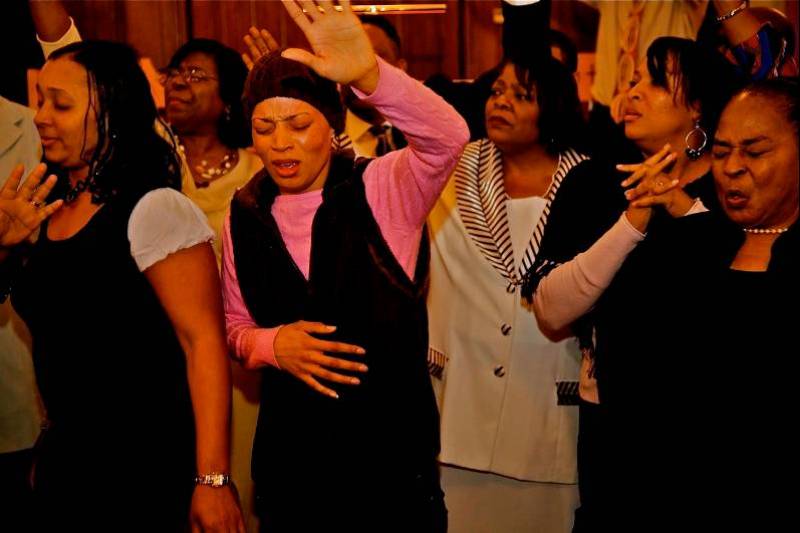
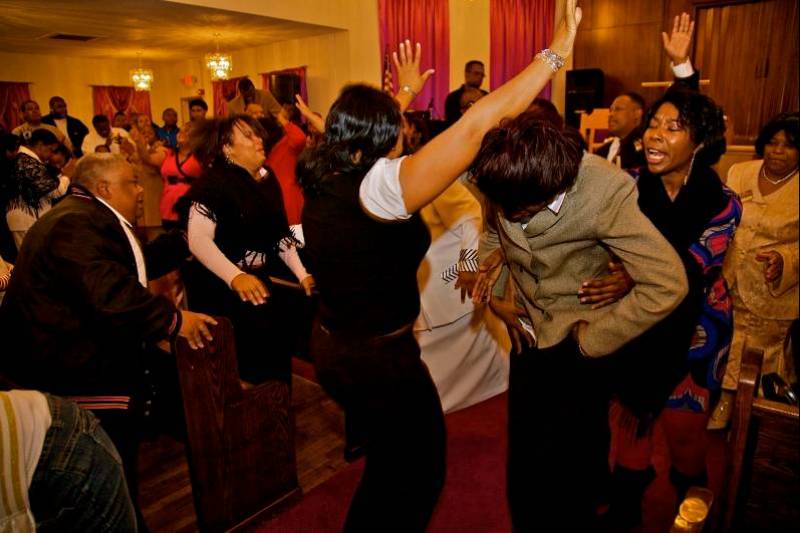
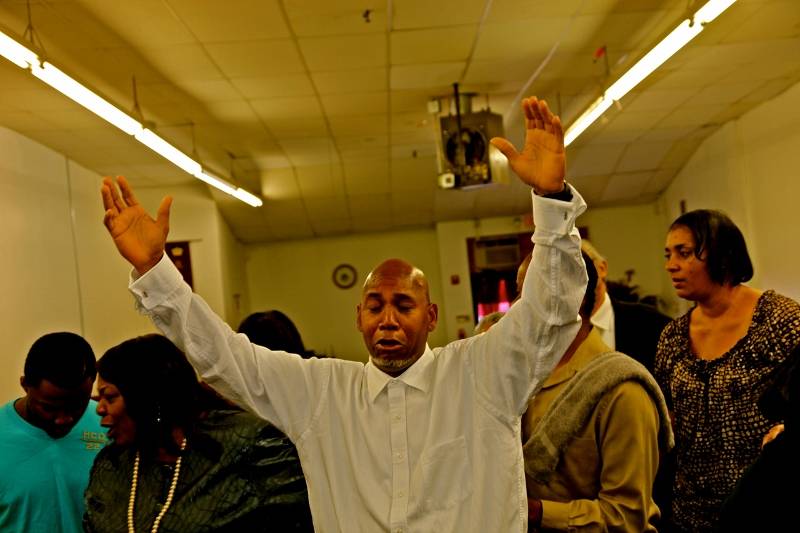
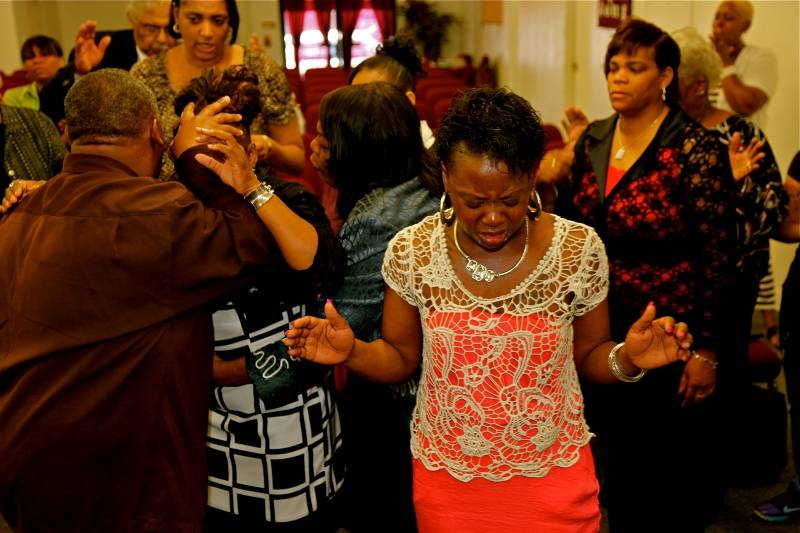
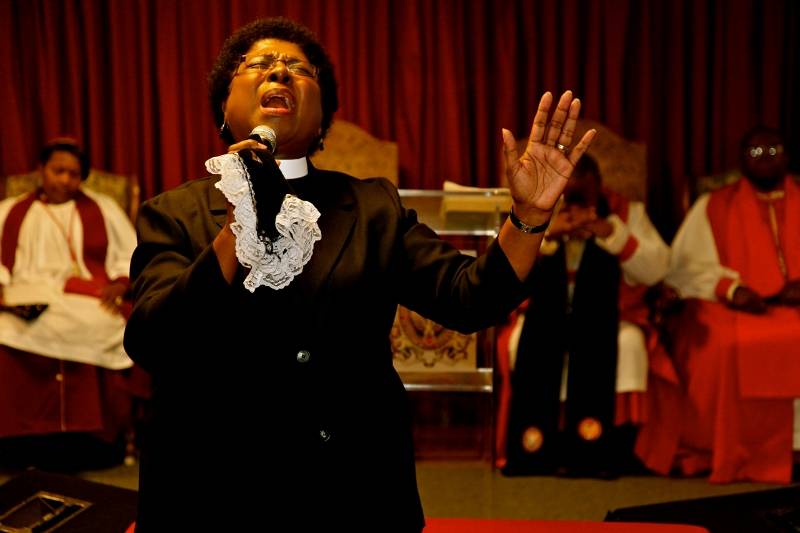
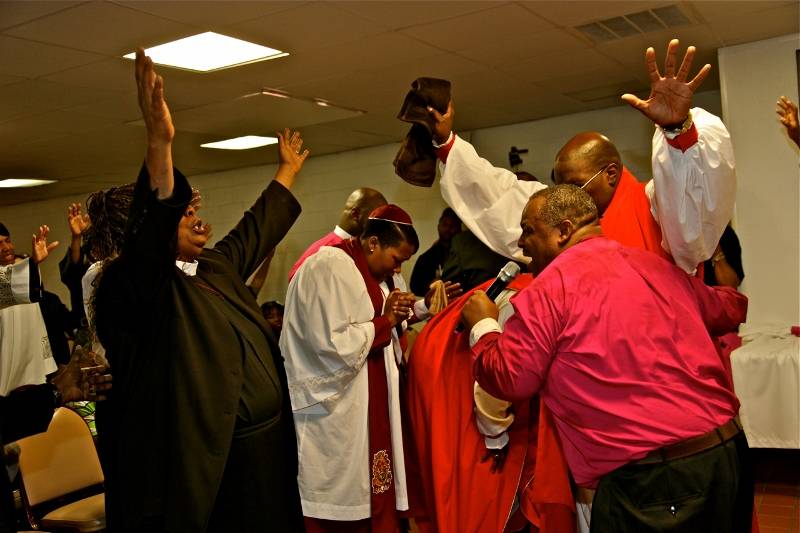
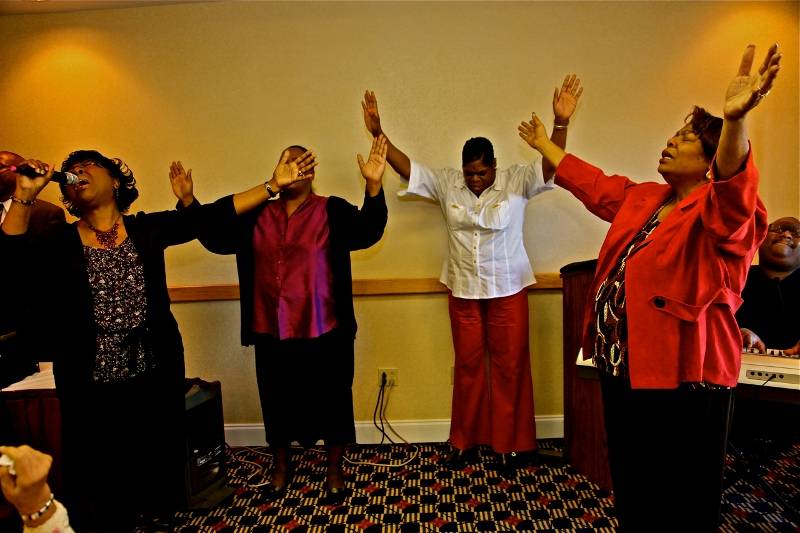
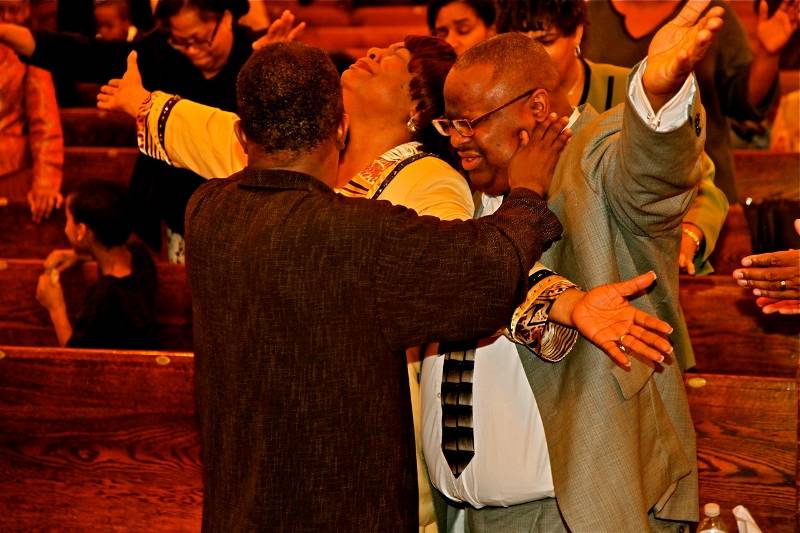
Pentecostal churches like the House of Manna make up 1% of all religious institutions in Providence, Rhode Island. The House of Manna remains true to the beliefs and practices of classical or traditional Pentecostalism, especially in acknowledging the gifts of the spirit. The "charismata" or gifts of the spirit are usually translated in the human practices of healing, "glossolalia" (or speaking in tongues), and prophecy. At the House of Manna, it is not uncommon to observe the movement of spirit exhibited in the congregants' ecstatic expressions common in black Pentecostalism in particular and black religion in general. The slow or up-tempo gospel tunes of the musicians usually contribute to the welcoming the spirit of God.
The deep Pentecostal roots at the House of Manna is partly attributed to one of the two leaders, Apostle Robert Robinson. Born in 1962, a native-son of Providence, Robinson was raised in a Pentecostal household. Both of his parents were ministers (his mother is still living). Robinson comes from a long line of preachers and musicians who contributed to the religious landscape in Providence when they migrated from Delaware in the late '50s. His aunt, Pastor Goldie Lee Ricketts, organized one of the most popular congregations, Mount Calvary Church of Deliverance, in Providence during the 1970s. Although formally uneducated, Pastor Ricketts possessed a charismatic personality, a vernacular preaching-style, and spiritual gifts (such as healing, prophecy and musical expression) that appealed to many people within and outside of Providence. Following a long tradition of twentieth-century African American female Pentecostal pastors, such as Elder Lucy Smith, Ricketts formed a powerful ministry independent of the patriarchical denominations and episcopal bureaucracies within Pentecostalism and wider western Christianity. According to Cheryl Townsend Gikes, "the Sanctified Church elevated black women to the status of visible heroines - spiritual and professional role models for their churches [and communities]." The House of Manna continues the early Pentecostal logics of gender inclusivity in the person and ministry of Pastor Glenda Robinson, who actually pastors and oversees the House of Manna in Robert's absence. She also leads a powerful women's ministry. To be sure, Pastor Ricketts had a direct influence on Apostle Robert and other pastors in the Providence area. Two years before he accepted his divine vocation to pastor in 1985, Pastor Ricketts prophesized that he would one day preach the gospel. Although Ricketts is deceased, she is alive in the memories and ministries of the Robinsons at the House of Manna.
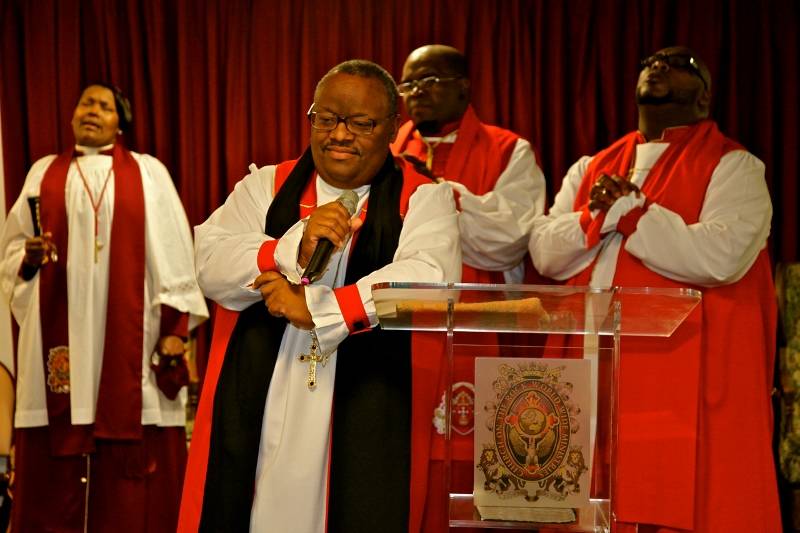
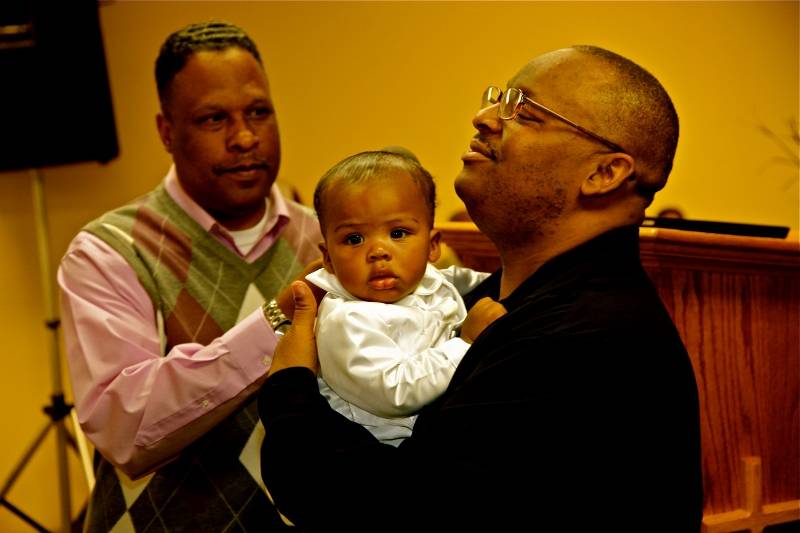
Apostle Robert Robinson and the House of Manna continue traditional or classical Pentecostalism to a degree. The House of Manna has incorporated traditional Pentecostalism into new religious trends in contemporary Protestantism. The House of Manna could easily be classified as "neo-Pentecostal." Robinson deviates from his Pentecostal roots of piety and judgment that are usually associated with purity or moral codes. The purity codes partly rooted in a fire-and-brimstone doctrine that dates back to the Holiness-Pentecostal traditions of the nineteenth and twentieth century. The purity codes highlight the tension between classical Pentecostalism and modern culture. Robinson recalled that as a young person he was forbidden to watch television or motion pictures, to consume Coca-Cola or other strong beverages, and to attend dances. He jokingly recalls that he did not attend his first motion picture until he was married. Now, he understands the practical utility of the moral codes that kept him out of trouble. Like other neo-Pentecostals, such as T.D. Jakes, Robinson trades in the sin-based, fire-and-brim stone doctrine for a message of love, healing and forgiveness.1 Robinson believes that the stringent moral codes hinder persons from accepting the faith and stunts their spiritual maturation. Rather, Robinson and the House of Manna embrace a "come as you are" disposition and attend to every person's humanity. In this sense, the House of Manna is a place of refuge for the "weary and heavy-laden." In addition to eluding the strict moral codes of his youth, Robinson has supported the ministry of Christian hip-hop dance, organized by his son. Robinson lives by his aunt's motto: that one has to be open to change.
Another interesting aspect of the neo-Pentecostalism promulgated by Robinson and the House of Manna is the strong emphasis on education and training. In this sense, Robinson does not reduce Pentecostalism to the doctrine of second works or the baptism of the spirit, especially exhibited in glossolalia.1 For instance, Robinson thinks that too many preachers rely on their divine calling and gifts of the spirit without intense study and preparation. He goes to great lengths to express to his "sons in ministry" that speaking in tongues and "whooping" should not override sound theology and biblical hermeneutics. Robinson has written numerous books, continues to study both Hebrew and Greek, and instructs ministers within and outside the United States. He received his biblical and ministerial training at his uncle's bible school in Rhode Island. Beyond the debates on classical and neo-Pentecostalism, there is historical evidence that African American Pentecostals built and organized their own educational institutions in the twentieth century.2 At the House of Manna, individuals are challenged to love God with both head and heart, with both mind and spirit.
The House of Manna continues to serve Providence and the wider global community in a myriad of ways. Beyond Providence, Apostle Robinson is preaching, teaching, and anointing in places as far away as Africa. The House of Manna strives to be a light in the world.
1 See: Jonathan L. Walton, Watch This! The Ethics and Aesthetics of Black Televangelism (New York: New York University Press, 2009), 80-81. "Neo-Pentecostals affirm the experiential encounter with the Spirit, divine healing, and deliverance from demonic forces without the negativism commonly associated with the doctrines of hellfire and brimstone."
2 See: Shayne Lee, T.D. Jakes: America's New Preacher (New York: New York University Press, 2005), 34.
3 See: Anthea D. Butler, Women in the Church of God in Christ: Making a Sanctified World(Chapel Hill: University of North Carolina Press, 2007), 96-116.